Loop-based software factory to refactor and standardize an entire codebase
Problem
Our initial implementation for the compatibility matching system was coupled to a Shopify Integration. We needed to refactor and decouple it to make it provider agnostic to allow us to support other markets (like physical dealerships). I had to fold about 20 legacy repos into bounded-context monorepos while also standardizing the platform architecture: 465 work units. That was too much to do by hand, so I built a loop harness (Early 2026) and dependency graph to maximize the throughput.
First principles
- This was a pre-scoped, well-bounded transition with multiple facets (Refactor, Monorepo transition, Architecture Standardization)
- Work with dependencies can be scheduled like a build graph and executed in independent parallel streams.
Approach
The Matchpoint Loop Harness:
- parses work orders into a SQLite ledger, with waves and a dependency graph;
- picks the next eligible work order and opens a git worktree for it;
- has a generator agent write the change;
- has a fresh-session evaluator check it;
- has a separate fresh-session stop-judge give the verdict;
- merges development changes automatically and holds production changes for owner approval.
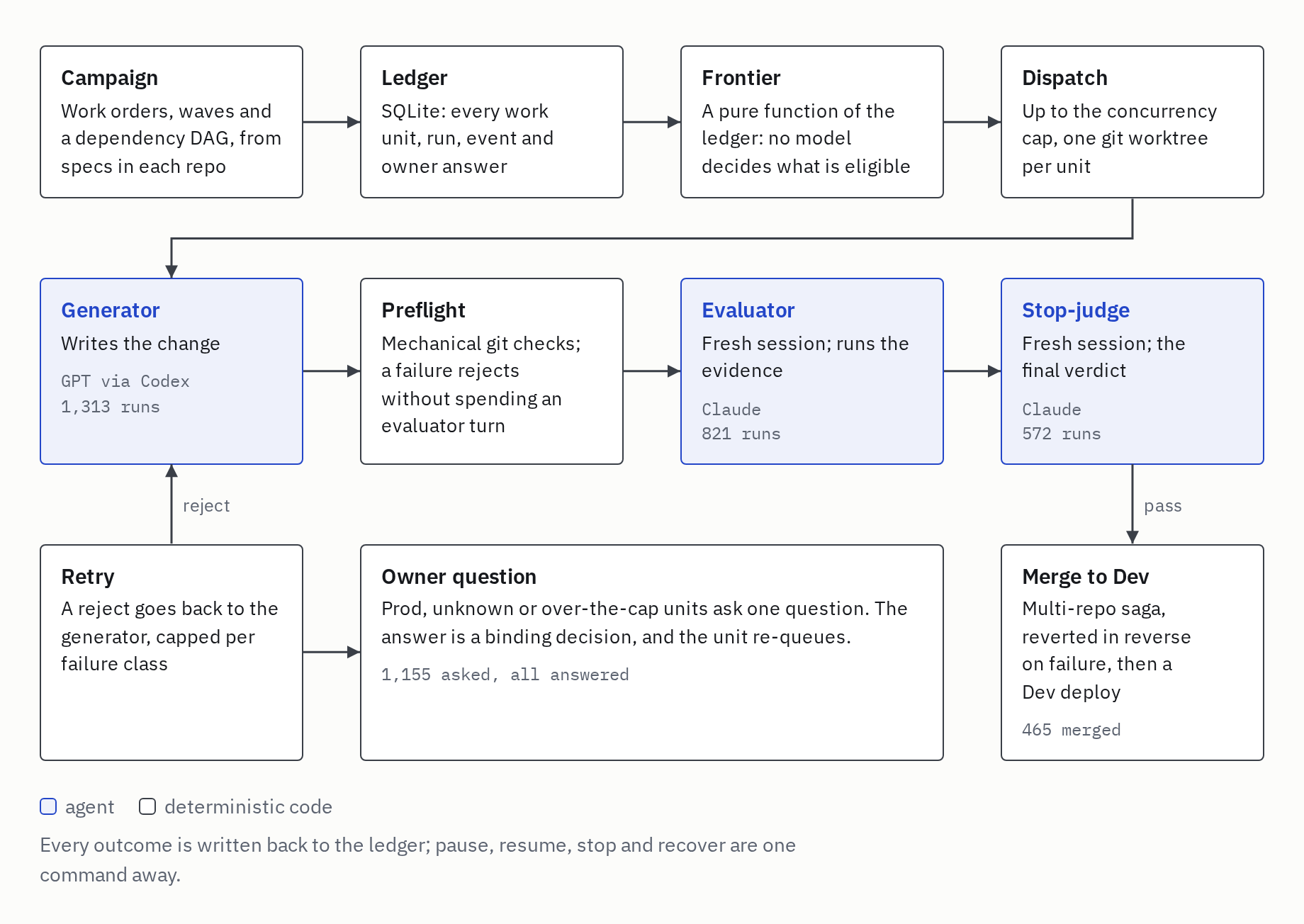
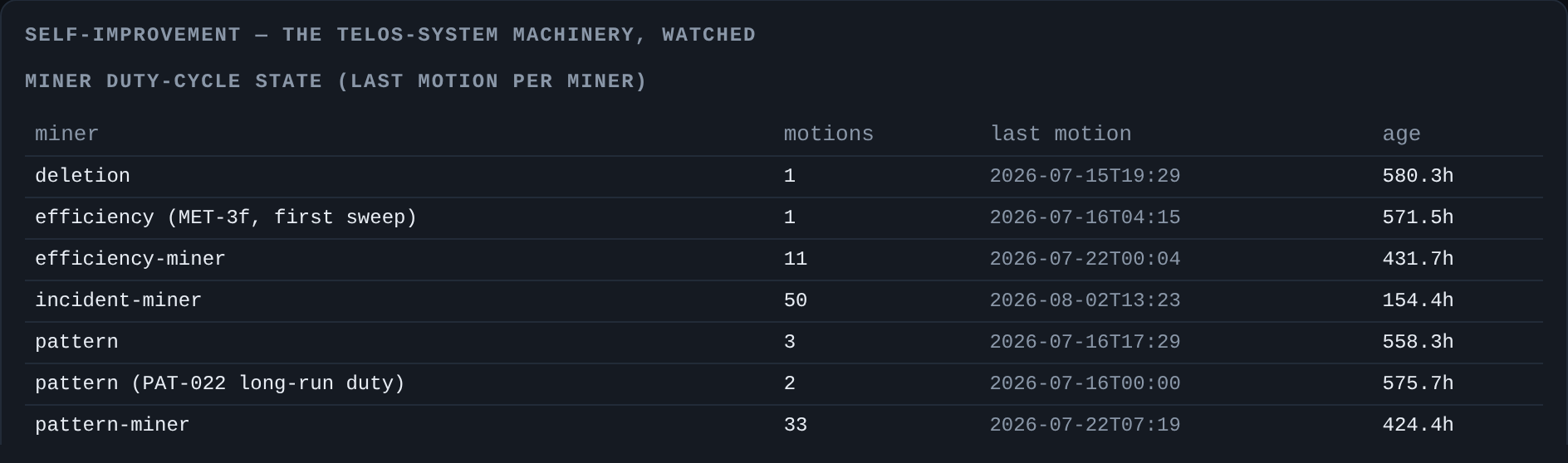
It also has pause, stop and recover controls, and a web console. Extended further with mining agents to proactively identify opportunities for design pattern reuse, operational complexity improvements, and code removal.
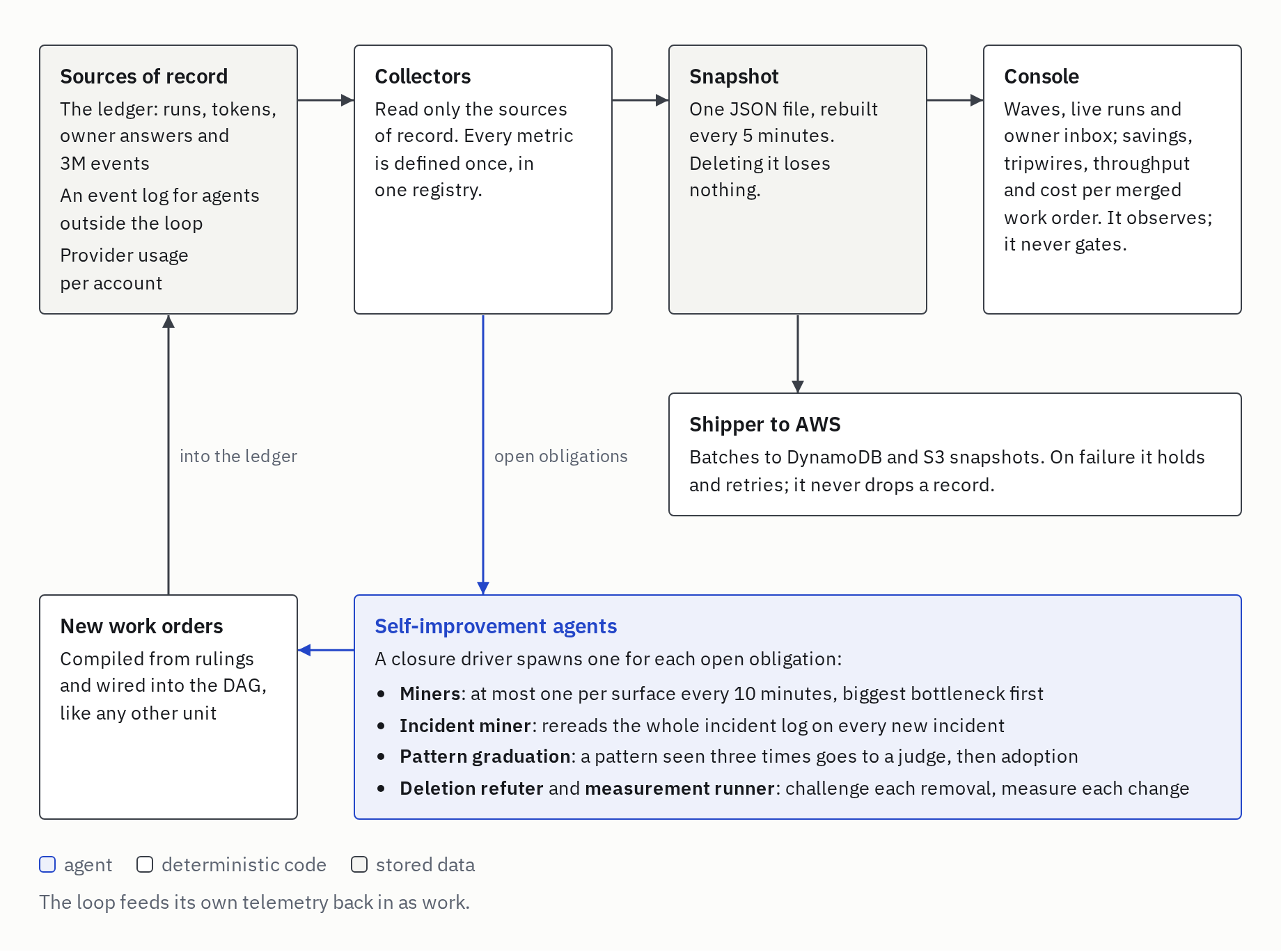
Skills I taught myself
- Multi-agent orchestration with Codex and Claude Code.
- Building a software factory which also required the account pool, throughput and efficiency telemetry, and an observability / command center dashboard
- Ledger-driven scheduling with SQLite and independent git worktrees.
Result
A 55.9k-line engine with 152 test files, telemetry stores, and a command center. One run applied a 105-work-order amendment at a concurrency of 6. Max token burn was 2.0B tokens in one day, rotating through 14 Claude Accounts and 3 OpenAI Accounts.
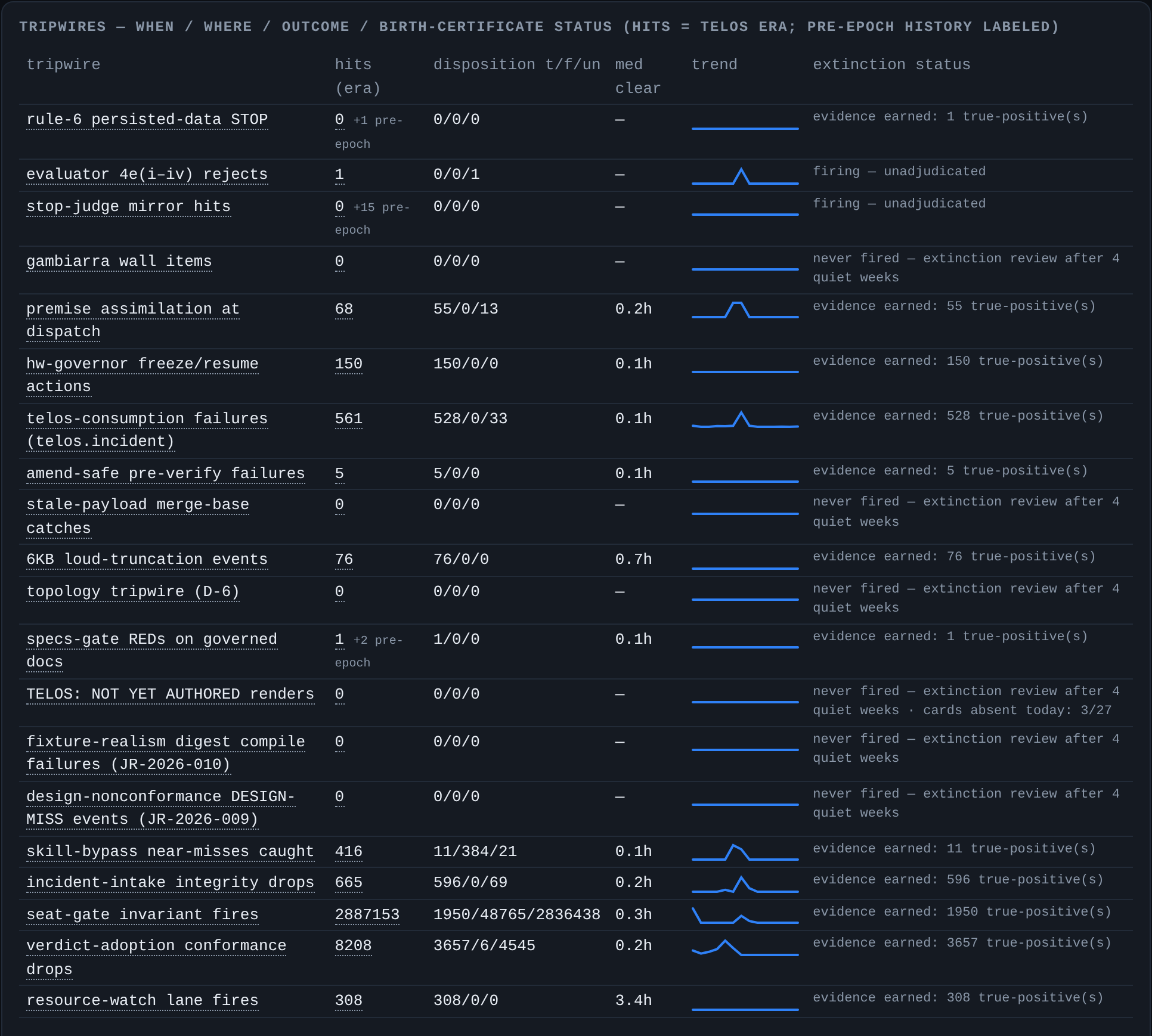
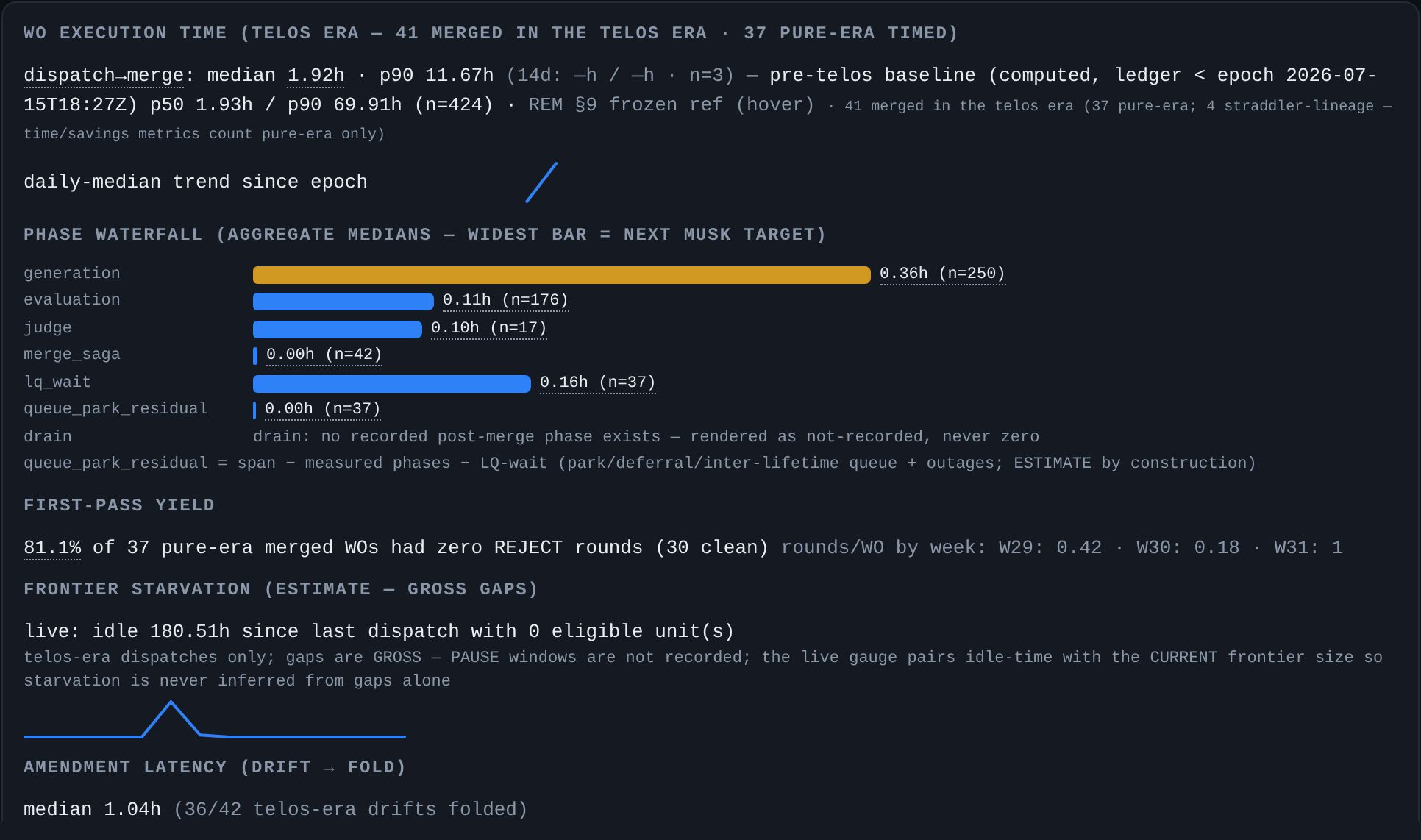
Command center screenshots
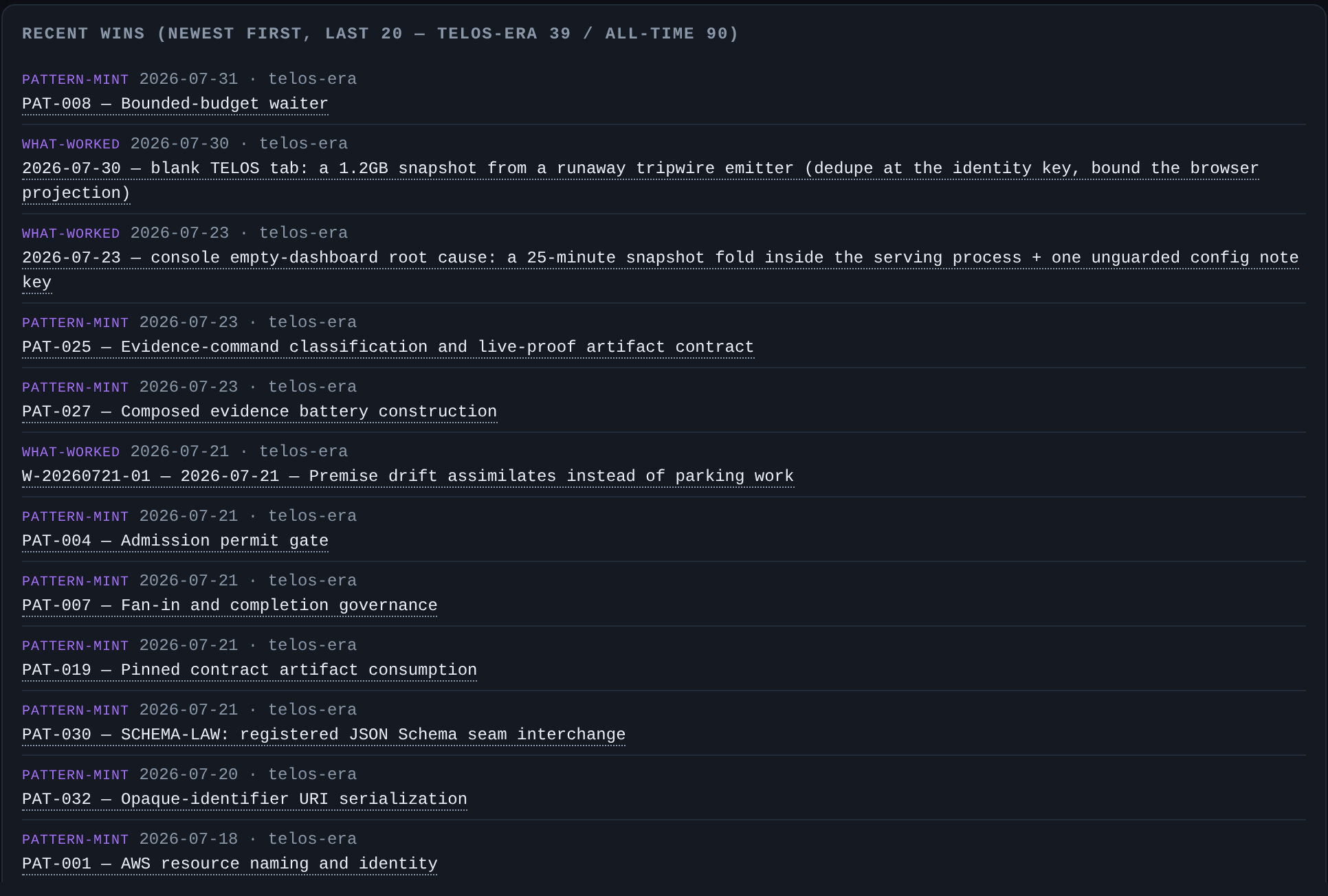
From the console’s Telos view, as of 2026-08-08.
Next → Telos